
Toi Ohomai Tutors Embrace Life and Learning in China
Thursday, 28 May 2026
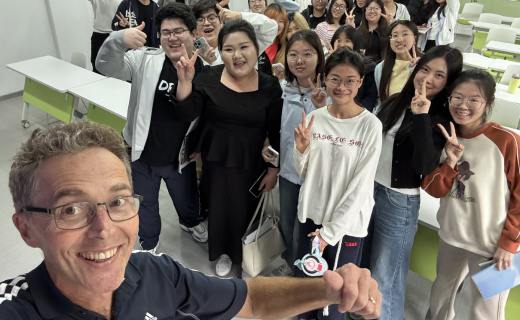
Two Toi Ohomai tutors are gaining fresh perspective, both professionally and personally, during a three-month teaching placement in China.
Gordon Oakley and his wife Sue Oakley are currently based in Qingdao, a coastal city of more than seven million people, where they are teaching at Qingdao Technical College (QTC). While Gordon is delivering tourism and hospitality programmes, Sue is teaching conversational English in a tourism context.
From the moment they arrived, the scale and pace of life stood out.
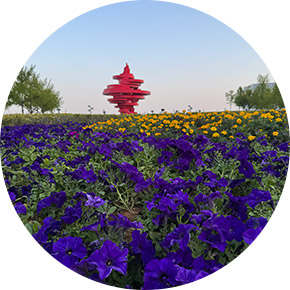
“The city is huge, with wide, tree-lined roads and millions of people living in high-rise apartments,” they said. “It was the tail end of spring blossoms when we arrived, which made it beautiful, but you also have to be very aware crossing the roads, traffic doesn’t always operate the way we’re used to in New Zealand.”
Despite the size, Qingdao surprised them with its calmness and modern infrastructure, including a high number of electric and even autonomous vehicles.
The QTC campus has also made an immediate impression. “It’s large, beautifully maintained, and very well set up. Most students live on site, and the facilities are extensive,” Gordon said. “It feels like a self-contained community.”
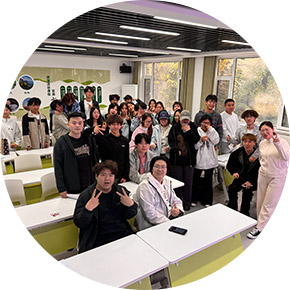
Both tutors are teaching intensive four-week courses across first and second-year cohorts. Gordon’s subjects include Destination Management and Introduction to Tourism and Hospitality, while Sue’s focus is on building students’ confidence in spoken English.
One of the most striking differences they have observed is in students’ language skills.
“The students can write extensively in English, but speaking and communicating is more limited,” Sue explained. “So we’ve adapted by using their writing strengths as a foundation to build confidence in speaking.”
Creating a supportive classroom environment has been key.
“It’s about making it safe to make mistakes and encouraging students to try,” Gordon said. “We’ve used bilingual resources, translation apps and lots of recap to reinforce learning.”
Sue has taken a similarly hands-on approach, drawing on real-world materials and experiences. “I use photos from New Zealand, travel experiences, and even things like menus and brochures we collect locally. It helps spark conversation and makes it relevant.”
Both Gordon and Sue have been struck by the enthusiasm and curiosity of their students.
“They’re incredibly interested in us, in New Zealand, and in Māori culture,” they said. “There’s a real openness and willingness to engage.”
That openness has extended beyond the classroom. Students often approach them during meals to practise English, leading to hour-long conversations about family life, culture and home.
A standout experience was a student-led tour of Qingdao. “It wasn’t just the places we visited, it was the conversations,” Gordon said. “We saw things we never would have found on our own.”
Back in the classroom, those relationships have added another dimension to teaching. Gordon recalled one student, an aspiring chef, who regularly shares photos of his cooking. “It’s been really special to connect over that shared interest.”
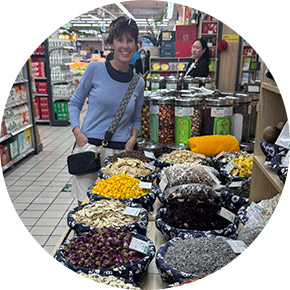
Outside of work, the couple has embraced the rhythm of daily life in Qingdao, exploring neighbourhoods, markets and the city’s 42-kilometre coastal walking path.
“Everywhere you go, there’s something different. Underground supermarkets, food markets tucked between apartment buildings, or people dancing and exercising together in public spaces,” Sue said.
They’ve also enjoyed observing cultural traditions.
“Food is central to everything. There’s also a strong respect for elders and a sense of community in daily life.”
Adjusting to some aspects of local living has come with humour. Their apartment, for example, has provided a few memorable moments.
“We couldn’t work out how to get hot water in the kitchen, only to realise we had to boil the jug,” Sue laughed. “And the bathroom is a full wet room.”

The experience has required flexibility, especially when it comes to teaching tools and technology. Without access to familiar platforms, Gordon has turned to WeChat to share resources and communicate with students.
“It’s become a one-stop shop for everything,” he said. “It’s something I’d definitely recommend to other tutors coming here.”
Both tutors credit their partnership as a key support. “Being here together has made a huge difference,” Gordon said. “We can problem-solve, share ideas and support each other.”
The placement has also highlighted differences in education systems.
“China has a very competitive system, whereas New Zealand is more holistic,” Sue said. “Opportunities for Chinese students to travel and experience other cultures can be harder to access.”
For Gordon and Sue, the exchange is mutually beneficial.
“We’re learning just as much from the students as they are from us,” Gordon said. “They’ve given us real insight into Chinese culture and everyday life.”
With several weeks still to go, the couple hopes to explore more of the region, including Laoshan and possibly Beijing, while continuing to build connections with students and colleagues.
“There’s still so much to see,” Sue said. “But what we’ll take away most are the relationships and the memories.”