
Dish‑rupted Delivers More Than Dinner
Tuesday, 19 May 2026
What happens when culinary students are given creative freedom, a handful of unknown ingredients, and a brief to completely rethink the dining experience?
At Toi Ohomai Institute of Technology, the answer was clear: you get Dish‑rupted, an immersive, multi‑course event that challenged expectations, showcased emerging talent, and delivered meaningful impact for the wider community.
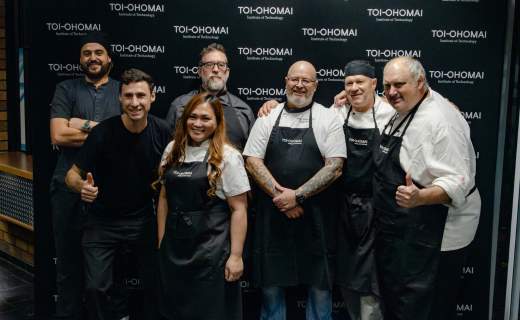
Held as part of the 2026 Flavours of Plenty Festival, Dish-rupted was anything but a traditional food event. Designed as a moveable feast, guests travelled through a series of spaces across campus, each offering a new food experience and a new perspective. But beyond the novelty, the night carried a deeper purpose, bringing together education, sustainability, and community in a way that left a lasting impression.
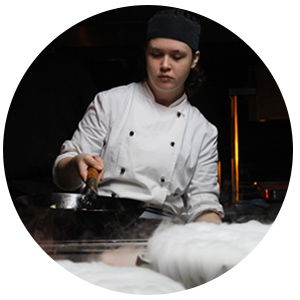
The concept began as a collaborative idea among the Toi Ohomai culinary team, led by Academic Staff Member Marco Fuchser, with a clear intent: to move beyond the familiar.
“We wanted to create something that was more than a standard sit‑down meal,” Marco says.
“If we were talking about pushing the palate, then we needed to push everything, flavour, format, creativity, and the overall experience.”
The result was an event that blurred the lines between dining and performance. Guests moved between spaces, encountering different atmospheres, textures, and presentations along the way. It was, as tutor Noel Remacle describes, “slightly uncomfortable in a good way” and a deliberate departure from expectation.
“We wanted to challenge people,” Noel says. “Not just with flavour, but with visuals, interaction, and atmosphere. It became something more immersive, almost like an Alice in Wonderland journey where you don’t quite know what’s coming next.”
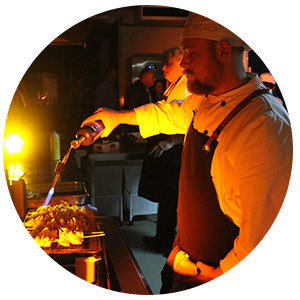
At its core, Dish‑rupted reinforced a simple idea that food is never just about what’s on the plate. It’s about storytelling, connection, and the emotions that surround a shared experience.
While the evening delighted guests, it was equally transformative for the students behind it.
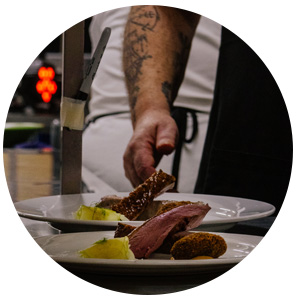
Unlike a controlled classroom environment, Dish‑rupted required students to operate in a fast‑moving, high‑pressure setting with real diners, real expectations, and very real unpredictability. Adding to the challenge was the inclusion of mystery ingredients, supplied just days before the event.
“We didn’t know exactly what we would receive,” Marco says. “That meant everyone had to stay flexible, focused, and ready to adapt.”
Students rose to the occasion. From kitchen teams crafting creative dishes from unexpected ingredients, to front‑of‑house students managing service, every aspect relied on collaboration and quick thinking.
“They had to put together everything we’ve been practising. From welcoming guests to serving, timing and presentation,” says hospitality tutor Giorgio Ciraulo. “It was real‑world training. You could see them moving with purpose, thinking ahead, and working as a team.”
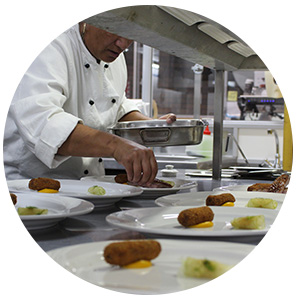
In many cases, students stepped beyond their comfort zones. Bakery students supported service roles, others took on responsibilities they hadn’t initially signed up for, and throughout the night, adaptability became one of the most valuable skills on display.
“Many of them did jobs they didn’t expect,” Marco says. “But they all stepped up. The guests would never have known how much was happening behind the scenes.”
For Noel, this type of experience is essential.
“Pressure, uncertainty and live guests create moments where students grow the most. You can’t replicate that in a classroom.”
A defining feature of Dish‑rupted was its partnership with Good Neighbour, a Tauranga‑based organisation focused on food rescue and community support. The collaboration added a powerful layer of meaning to the event.
Through Good Neighbour, surplus ingredients, perfectly good food that would otherwise go to landfill, were incorporated into the menu. For students, it was both a creative challenge and a lesson in sustainability.
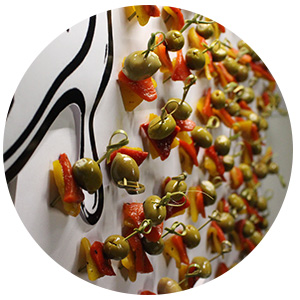
“Great food doesn’t have to be expensive,” Marco says. “It’s about what you do with the ingredients.”
For Good Neighbour General Manager Renee Hanna, seeing rescued food elevated into a premium dining experience was both meaningful and confronting.
“It shows people the kind of food that would be going to waste,” she says. “To see those ingredients presented at such a high level really highlights the importance of food rescue.”
Each year, Good Neighbour rescues an average of $4.8 million worth of food, redistributing it through more than 80 partner organisations to support whānau facing food insecurity. Events like Dish‑rupted help bring visibility to that work and demonstrate the role the community can play.
“Any opportunity to have these conversations is important,” Renee says. “We all have a part to play in minimising waste and supporting those who need it most.”
Beyond raising awareness, Dish‑rupted delivered tangible results. The event raised $4,660, with all proceeds donated back to Good Neighbour. The funds will contribute to the expansion of their community meal programme, which aims to produce at least 25,000 meals annually for people unable to cook for themselves due to health or other challenges.
But the impact extended further than fundraising.
For students, it was a chance to be part of something bigger than their coursework. It was an event that combined creativity, professionalism, and social purpose.
“There was a real sense of belonging,” Noel says. “No one was thinking about assessment, they were just part of something creative and meaningful.”
For guests, it was an experience that left a lasting impression, not just because of the food, but because of the story behind it.
And for the organisations involved, it reinforced the power of partnership.
“It’s collaborations like this that help us reach more people and make a bigger difference,” Renee says. “Good Neighbour isn’t just a charity. It’s a community effort.”
As the final plates were cleared and guests reflected on the evening, one thing was clear: Dish‑rupted was more than a festival event. It was a glimpse into the future of hospitality education, one that values creativity, adaptability, and social responsibility as much as technical skill.
For Marco, the success of the event comes down to the people behind it.
“I’m proud of the quality, the teamwork, and how it all came together,” he says. “But most of all, I’m proud of how it made people feel.”
And that, perhaps, is the true measure of Dish‑rupted. Not just an event that pushed the palate, but one that connected people, sparked ideas, and demonstrated what could happen when innovation meets purpose.